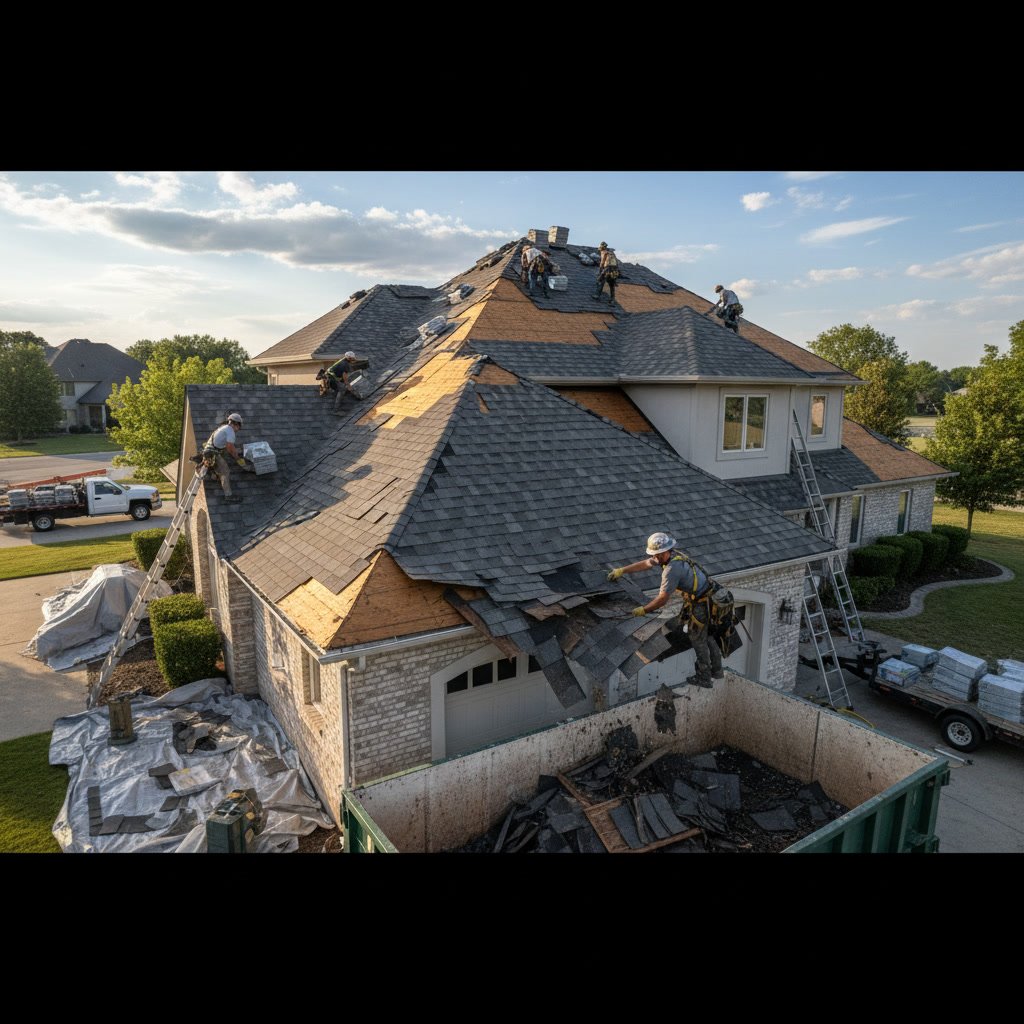
Deciding between commercial roof repair or replacement is one of the most critical choices a property owner will make. A commercial roof represents a significant investment, and making the wrong call can lead to wasted money on short-term fixes or premature replacement. The decision depends on factors including the roof’s age, the extent of damage, and the long-term cost of continued repairs versus a new system.
Commercial roofing systems differ from residential roofs in both structure and lifespan. Most flat and low-slope commercial roofs are designed to last 15 to 30 years depending on the material, but Ohio’s severe weather cycles accelerate wear. Understanding the condition of your roof and the threshold where repair no longer makes financial sense is essential to protecting your building and your bottom line.
Why Commercial Roofs Fail Faster Than You Expect
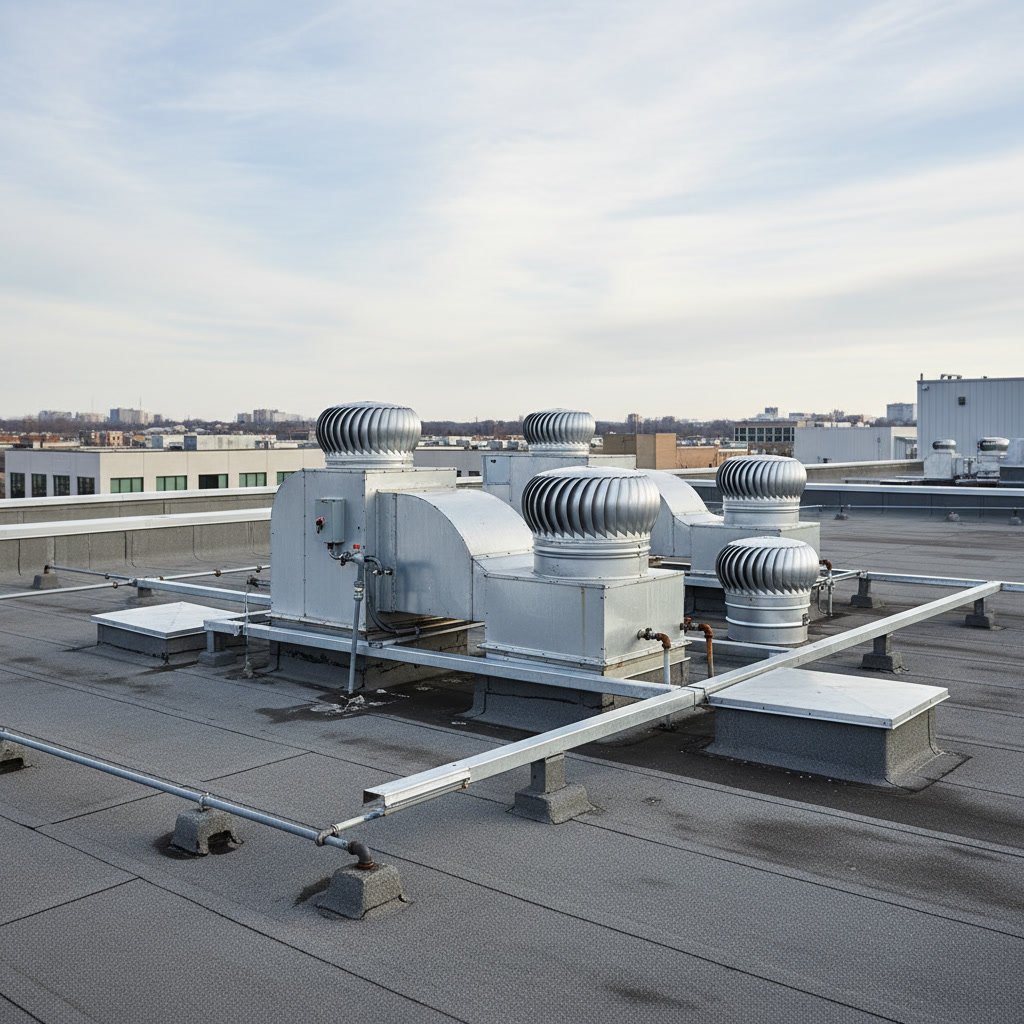
Commercial roofing systems endure constant stress that residential roofs rarely face. Flat and low-slope designs trap water longer, and the larger surface area means more exposure to UV radiation, thermal cycling, and wind uplift. HVAC units, vents, and rooftop equipment create penetrations that become weak points over time. Even a well-installed roof will show signs of aging within the first decade if not maintained properly.
Material degradation happens gradually, then suddenly. Membrane systems like TPO and EPDM lose flexibility as plasticizers evaporate. Seams separate. Fasteners back out. What starts as a small blister or crack can compromise an entire section within a single storm season.
The Age of Your Roof Is the First Indicator
Age alone does not determine whether you need replacement, but it sets the stage for every other decision. If your roof is less than 10 years old and shows isolated damage, repair is almost always the right answer. Between 10 and 20 years, the choice becomes situational. Beyond 20 years, even minor issues often justify replacement because the entire system is nearing the end of its serviceable life.
Older roofs require more frequent repairs, and those costs accumulate quickly. A roof that needs patching every year is signaling that widespread failure is imminent. Tracking repair frequency and total spend over the past three to five years provides a clearer picture than any single inspection.
Visible Damage Types and What They Mean
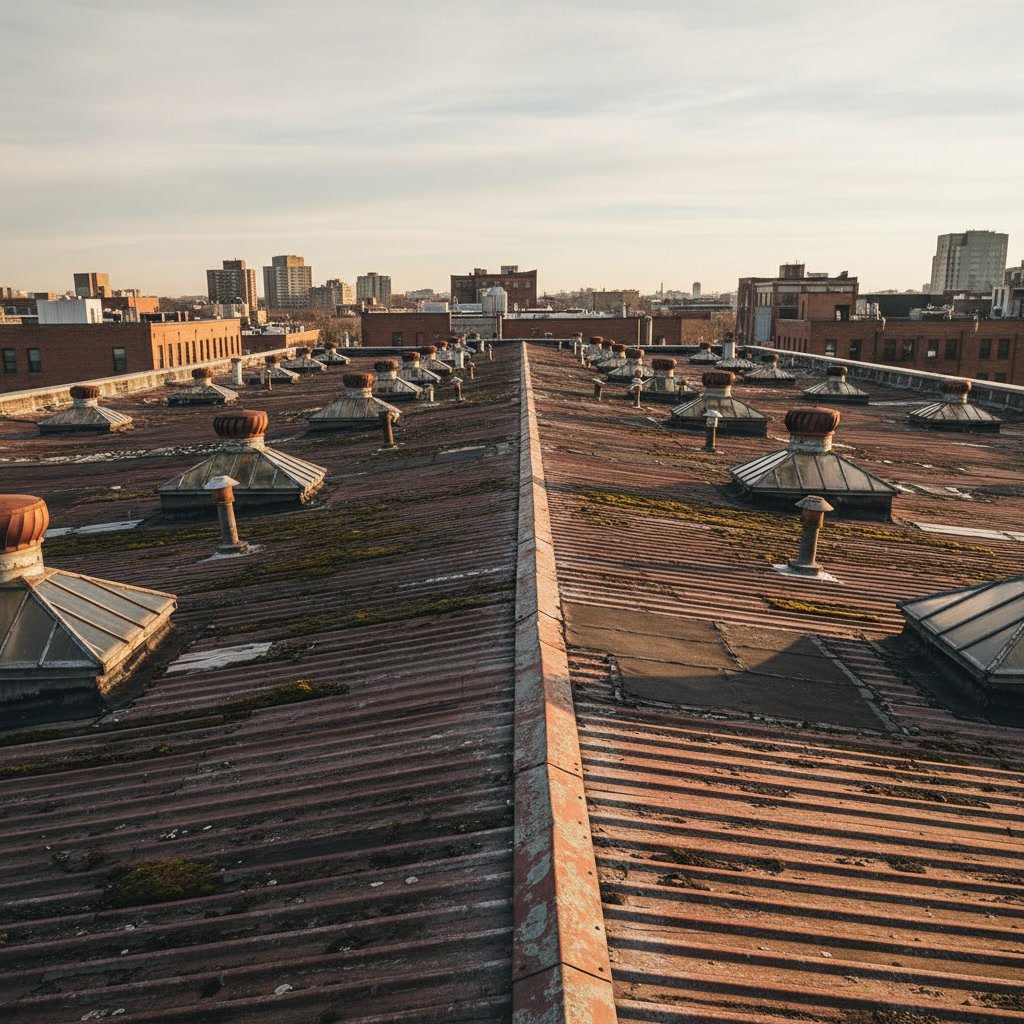
Surface damage comes in many forms, and not all of it is catastrophic. Small punctures, isolated blisters, and minor flashing issues can often be patched without major expense. These repairs buy time and protect the underlying structure, especially if the rest of the roof remains in good condition.
More serious damage includes widespread cracking, large areas of exposed substrate, seam failures across multiple sections, and visible sagging or pooling. When damage is concentrated in one area due to a specific event like a fallen tree limb, targeted roof repair makes sense. When it appears across the entire roof, the membrane or substrate has likely reached the end of its useful life.
Interior Water Stains Tell a Different Story
Water intrusion is the most urgent sign that your roof is failing. Stains on ceilings, walls, or insulation indicate that moisture has already penetrated the roofing system and is damaging the building envelope. Even small leaks can spread horizontally along the roof deck before dripping into the interior, so the visible damage inside rarely corresponds to the true extent of the problem above.
If leaks are isolated and recent, repair may stop the issue. If you are seeing recurring leaks in different areas or persistent moisture despite previous repairs, the roof membrane or flashing system has failed systemically. At that point, patching is only delaying the inevitable.
Ponding Water and Drainage Problems in Kettering
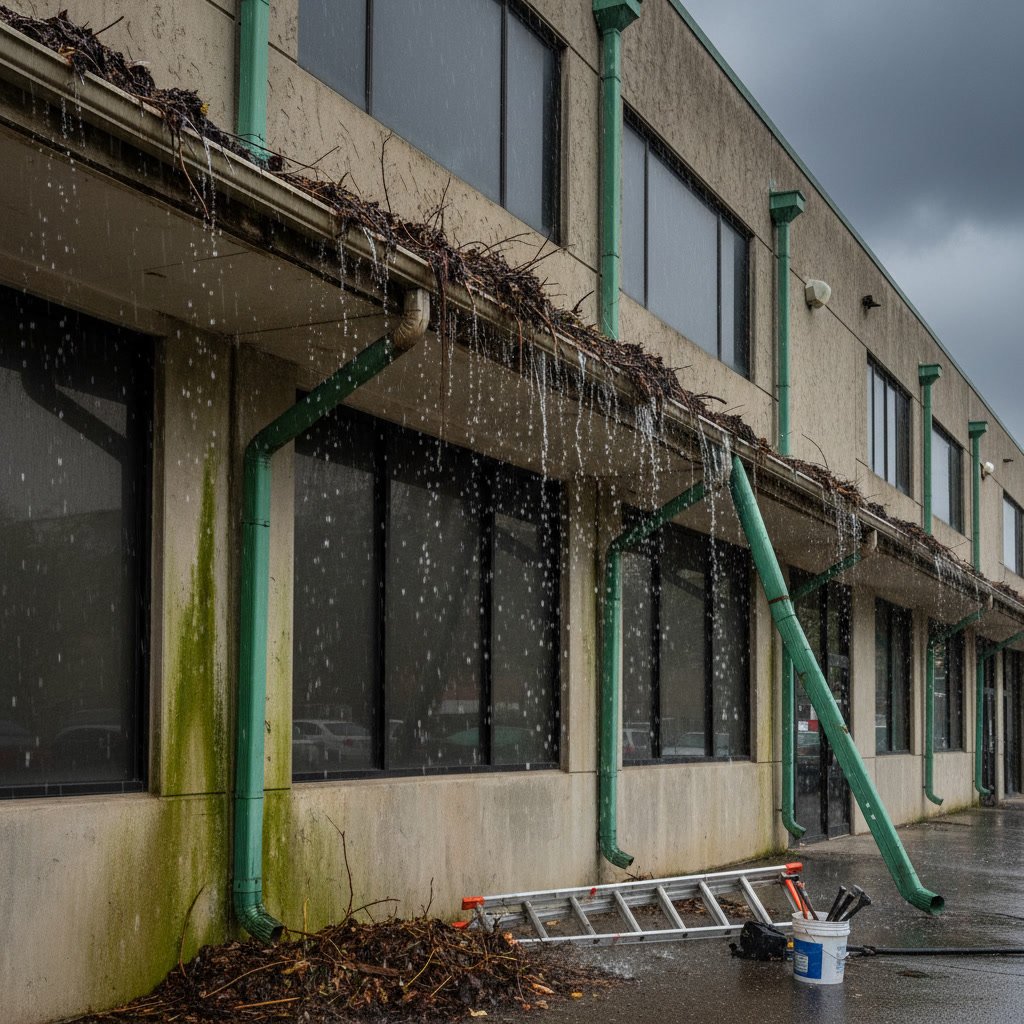
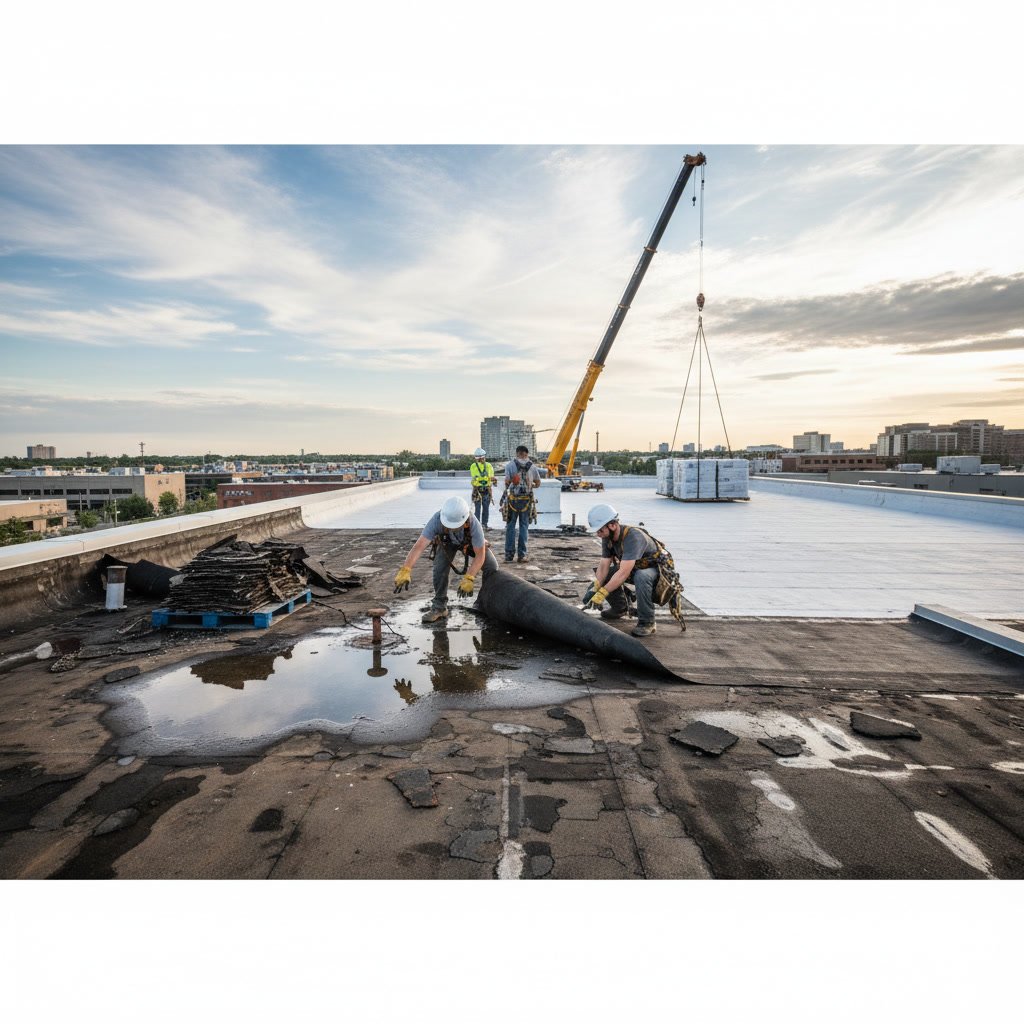
Ponding water is any standing water that remains on a flat roof for more than 48 hours after rain. Ohio’s frequent storm cycles mean commercial roofs in areas like Kettering face this issue regularly. Ponding accelerates membrane degradation, promotes algae and mold growth, and adds structural load.
Minor ponding caused by debris-blocked drains can be fixed with cleaning and minor slope adjustments. Widespread ponding across large sections indicates structural settling, inadequate roof slope, or deck damage. These issues often require comprehensive rework that approaches the cost of full replacement, making a new roof the smarter long-term investment.
Comparing Repair Costs to Replacement Costs
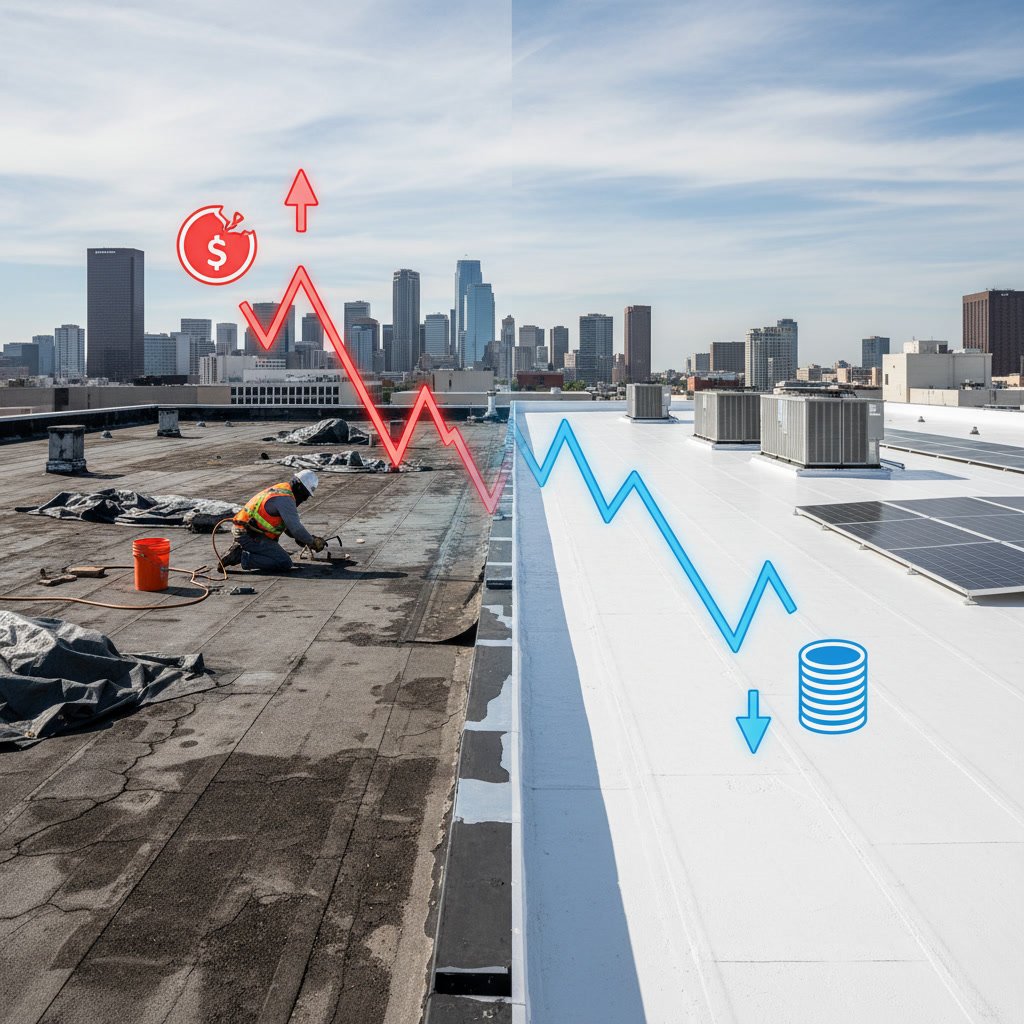
The industry rule of thumb is simple: if the cost of necessary repairs exceeds 30 percent of the cost of a full replacement, you should replace the roof. That threshold accounts for the likelihood of additional hidden damage and the reduced lifespan of a heavily patched roof.
For example, if a complete roof replacement costs 50,000 dollars and current repairs are quoted at 18,000 dollars, you are approaching the tipping point. Factor in that a repaired 18-year-old roof might only last another three to five years, while a new roof lasts 20 to 30 years, and replacement becomes the financially sound choice.
Energy Efficiency and Building Performance
An aging roof loses its thermal resistance. Insulation becomes compressed or wet, membrane reflectivity declines, and air leaks develop at seams and penetrations. Higher heating and cooling costs are a hidden expense that repair alone cannot fix.
Modern commercial roofing materials offer significantly better energy performance than systems installed even 15 years ago. If your utility bills have steadily climbed and your HVAC system runs constantly, a new roof with updated insulation and a reflective membrane can deliver measurable savings. Those savings offset replacement costs over time, making the investment more attractive than repeated repairs on an inefficient system.
When Code Compliance Forces Your Hand
Building codes evolve, and older roofs may not meet current standards for fire resistance, wind uplift, or insulation. If you are planning any major renovation, addition, or tenant improvement, local inspectors may require the roof to be brought up to code. In many cases, that triggers full replacement rather than patchwork compliance.
This is particularly common with commercial roofing projects where occupancy type changes or square footage increases. Proactively replacing a roof before a major project can streamline permitting and avoid mid-construction delays.
How Professional Inspections Reveal Hidden Issues
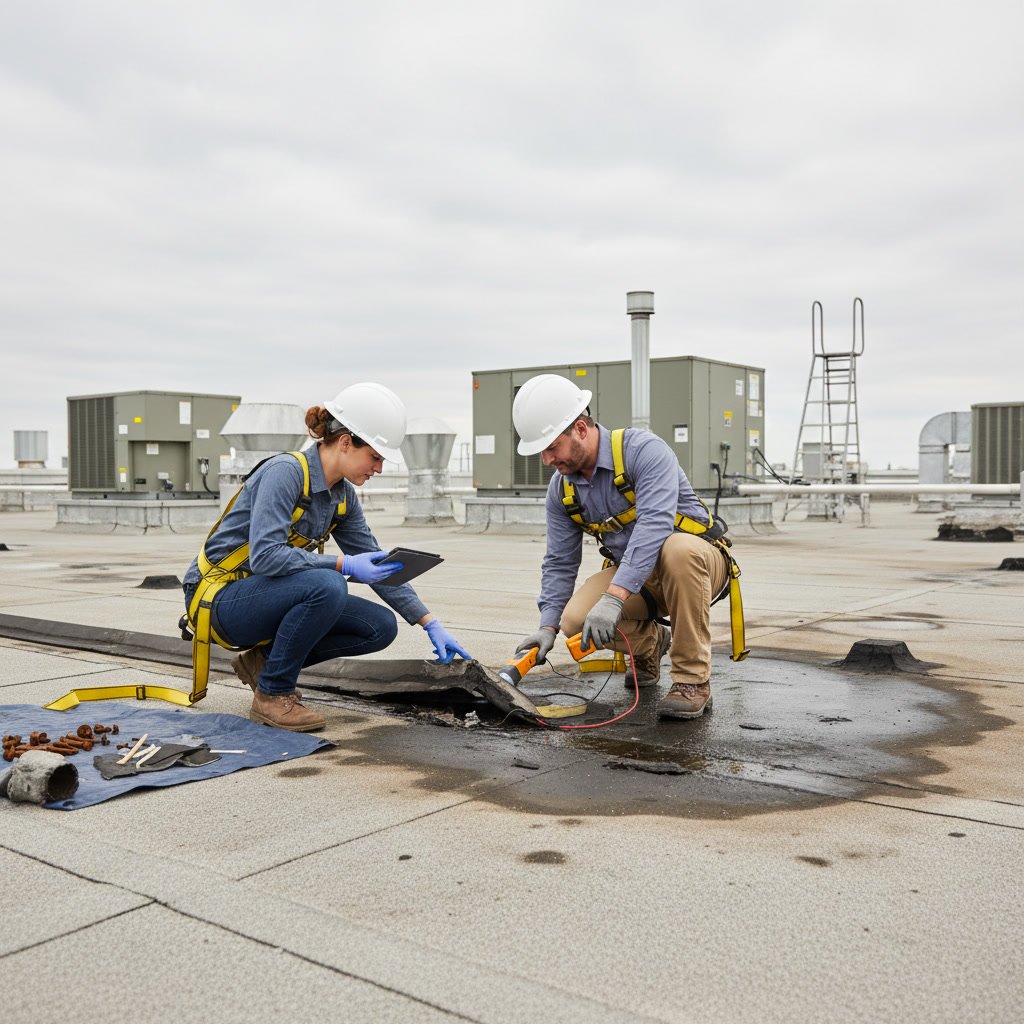
Surface-level inspections only tell part of the story. A qualified roofing contractor uses moisture meters, infrared thermography, and core sampling to detect trapped water, insulation failure, and deck rot that is invisible from above. These tools provide objective data that supports the repair-versus-replace decision.
An expert-level insight: infrared scans performed at night, after a sunny day, reveal wet insulation more accurately than daytime scans because wet areas retain heat differently. This method identifies damage zones that would otherwise go unnoticed until they cause interior leaks. Knowing the true extent of moisture intrusion often shifts the decision from repair to replacement, because wet insulation and decking cannot simply be patched over.
Comparing your situation to common issues outlined in related resources, such as residential roof repair versus replacement decisions, can offer additional perspective on the factors that influence timing and cost.
Protecting Your Investment with the Right Choice
Choosing between repair and replacement is not always straightforward, but the decision becomes clearer when you weigh age, damage extent, repair frequency, energy costs, and long-term goals. A roof nearing the end of its lifespan that requires repeated fixes is a liability, not an asset. Investing in a new system provides decades of protection, improved performance, and predictable costs.
Commercial property owners who delay replacement often face emergency situations during winter or peak business seasons, when costs are higher and contractors are less available. Planning ahead based on inspection data and performance trends allows you to control timing and budget rather than reacting to failure.
Eco Roofing has helped commercial property owners across the Dayton area make informed roofing decisions based on honest assessments and transparent pricing. Whether your building needs targeted repairs or a complete roof system upgrade, our team provides the expertise and workmanship to protect your investment for the long haul. Reach out to discuss your roof’s condition and explore your options at 937-6072141.