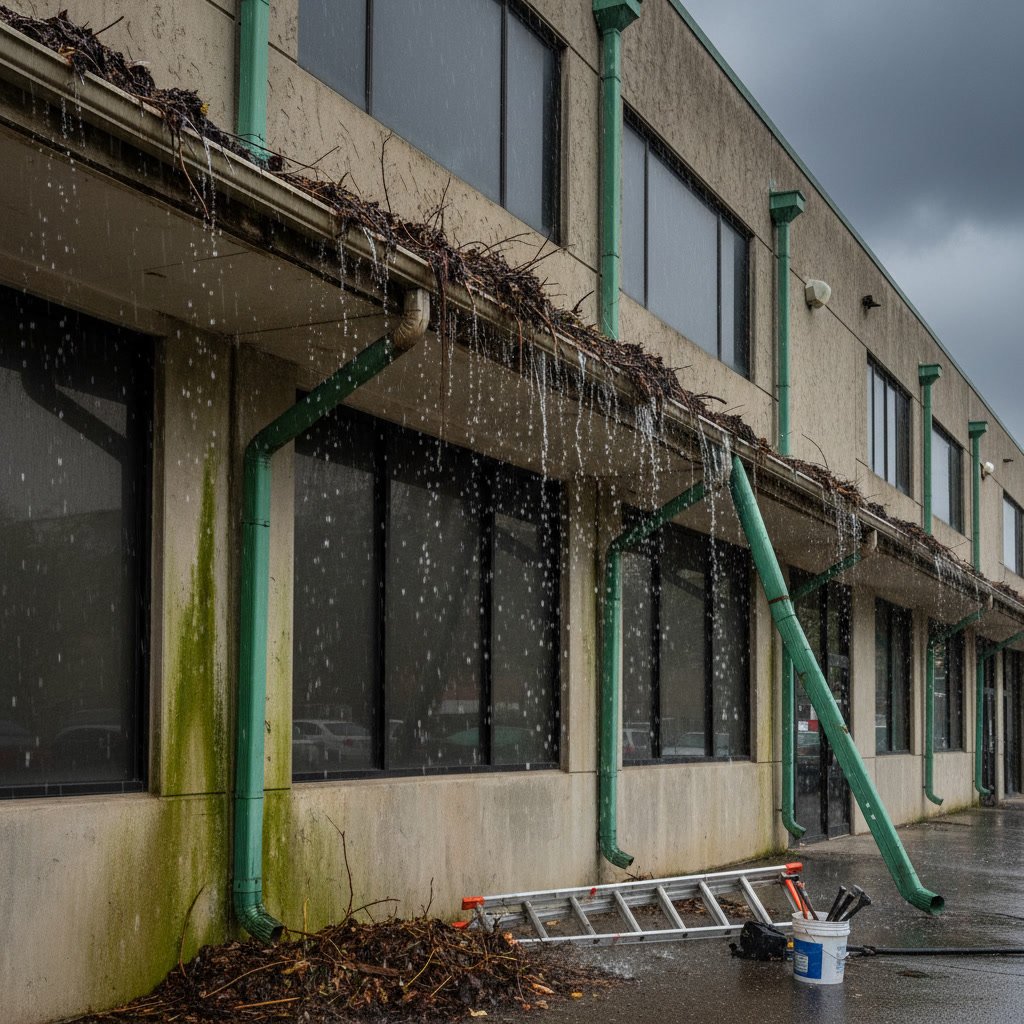
Routine maintenance keeps commercial gutters flowing properly, but chronic overflow, structural damage, and separation from the fascia signal the need for commercial gutter replacement rather than another cleaning appointment. When gutters show large cracks, rust holes, or frequent detachment, cleaning only delays the inevitable while water damage spreads to your building’s foundation and exterior walls. Recognizing these warning signs early protects your property investment and prevents costly emergency repairs during Ohio’s wettest seasons.
Why Commercial Gutters Fail Differently Than Residential Systems
Commercial buildings place far greater demands on gutter systems than residential homes. The larger roof surface area channels significantly more runoff during storms, and the extended horizontal runs create more weight stress along support points. Most commercial roofing systems direct water to fewer downspouts than residential setups, concentrating flow volumes that accelerate wear patterns.
Industrial and retail buildings often operate with flat or low-slope roofs that accumulate standing water, which then drains in sudden surges when temperatures rise or storms intensify. This stop-and-go flow pattern creates expansion cycles that loosen fasteners and warp gutter sections over time. Many older commercial properties use outdated gutter profiles not designed for modern water volumes, making structural failure almost inevitable after 15 to 20 years of service.
The Difference Between Clogged Gutters and Damaged Systems
Leaves, debris, and sediment cause predictable blockages that cleaning removes, restoring normal drainage within hours. Damaged gutters exhibit problems that persist after thorough cleaning, reappearing with every rain event regardless of debris levels. If water still overflows from sections you just cleaned, or if certain spots sag noticeably lower than adjacent areas, structural issues have progressed beyond what maintenance can address.
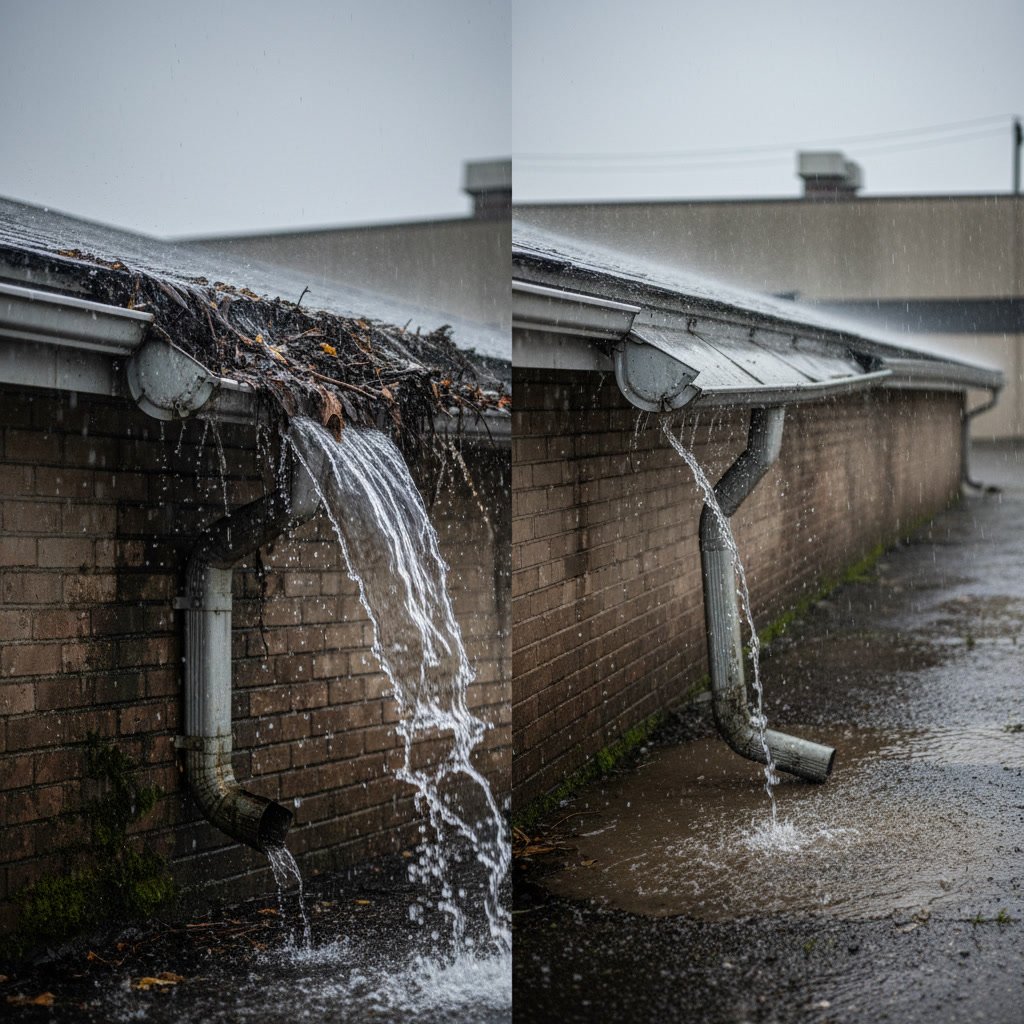
A quick test reveals the distinction: after cleaning, run water through the system with a hose for five minutes. Properly functioning gutters channel all flow to downspouts without spillage. Damaged systems leak from seams, drip through rust holes, or overflow from warped sections that no longer slope correctly toward drain points.
Visible Cracks and Separation at Seams
Hairline cracks in gutter sections expand during freeze-thaw cycles common throughout Ohio winters. What starts as a small split in November becomes a two-inch gap by March, allowing hundreds of gallons to pour directly onto walkways and foundation zones. Aluminum gutters develop these cracks near fastener points where stress concentrates, while steel systems crack along corroded zones weakened by years of moisture exposure.
Seam separation occurs when the sealant between gutter sections deteriorates or when thermal expansion loosens mechanical joints. You will notice vertical water streaks on exterior walls below these separation points, even when gutters appear clear of debris. This type of failure cannot be permanently repaired with caulk or sealant patches, as the underlying metal has lost its structural integrity at the joint.
Rust Holes and Metal Deterioration
Small rust spots indicate surface oxidation that cleaning and coating can manage. Rust holes that penetrate completely through the gutter material represent terminal failure requiring section replacement or full system upgrades. Once rust creates holes, the surrounding metal has thinned to the point where adjacent areas will fail within months, making spot repairs ineffective.
Galvanized steel gutters typically show rust patterns along bottom seams where standing water sits between rain events. Copper systems develop patina rather than rust, but can develop pinhole leaks from acidic runoff or incompatible metal contact. Aluminum gutters resist rust but corrode when exposed to certain building chemicals or salt spray in areas near winter road treatments.
Persistent Sagging Despite Proper Support in Kettering Buildings
Gutters installed with adequate hanger spacing should maintain a consistent slope toward downspouts without visible dips or low spots. When sections sag despite having hangers every 24 inches, the gutter material itself has weakened from repeated ice loads or the fascia board behind has rotted from chronic moisture exposure. Adding more hangers to sagging gutters only transfers stress to already-compromised mounting surfaces.
Many commercial properties built between 1980 and 2000 used thinner gauge aluminum gutters that lack the rigidity needed for Ohio’s heavy snow loads. These systems begin sagging after 12 to 15 years even with perfect maintenance, as the metal fatigues from repeated expansion cycles. Upgrading to heavier gauge materials during replacement prevents recurrence and extends service life to 30 years or more.
Water Damage Signs on Building Exteriors and Foundations
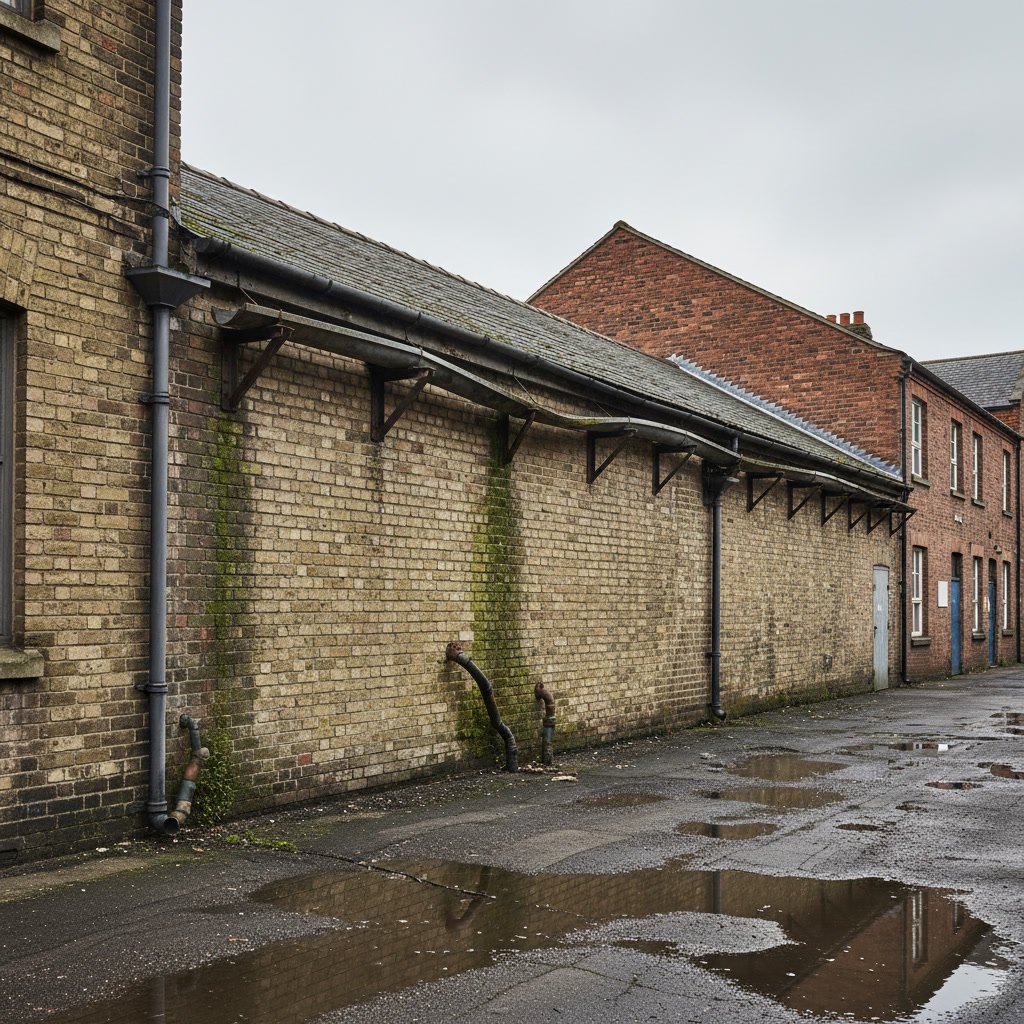
Staining patterns on exterior walls directly below gutter lines indicate chronic overflow that has progressed beyond temporary blockage. The streaks appear even after recent cleaning, confirming that damaged gutters cannot contain normal flow volumes. Foundation soil erosion near corners and downspout locations signals that water has been pouring over gutter edges for months or years, excavating channels that threaten structural stability.
Basement moisture problems often trace back to failing gutters that direct thousands of gallons against foundation walls during each storm. If interior dampness appeared or worsened over the past two years while gutter installation and replacement has been deferred, the connection is clear. Replacing gutters costs far less than repairing water-damaged interiors and compromised foundation structures.
Detachment from Fascia Boards
Gutters pulling away from buildings indicate either fastener failure or rotted fascia that can no longer hold mounting hardware. When you see gaps between the gutter back and the fascia board, water flows behind the system during every rain, soaking wood structures and creating conditions for mold growth. This gap widens progressively as water damage spreads through the fascia and into roof edge components.
Reattaching gutters to damaged fascia provides only temporary relief. Within weeks, fasteners pull out again as the deteriorated wood lacks holding strength. Proper repair requires removing gutters, replacing damaged fascia sections, and installing new gutters with corrosion-resistant fasteners driven into solid wood. The scope of this work matches full replacement projects, making partial repairs economically questionable.
Comparing Repair Costs Against Full Replacement Value
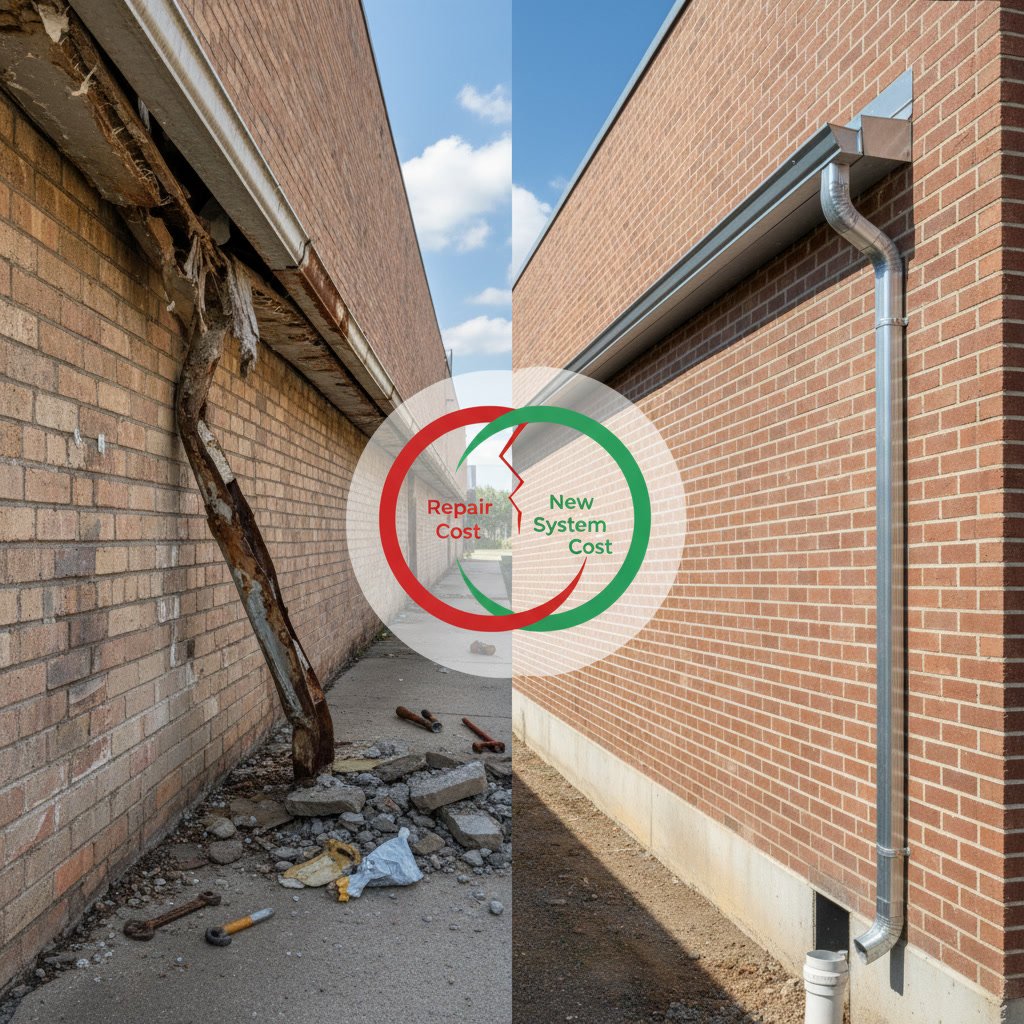
When repair estimates exceed 40 percent of full replacement costs, investing in new gutters provides better long-term value. A system requiring multiple section replacements, fascia repairs, and rehanger installations over a 100-foot run approaches the labor cost of complete replacement while leaving aged components that will fail within a few years. Replacement includes warranties on both materials and installation, protecting your investment for decades.
Emergency repairs during active leaks cost 30 to 50 percent more than scheduled replacement work, as contractors must respond immediately and work in difficult conditions. Planning replacement during dry months allows proper scheduling, better material selection, and thorough fascia inspection that prevents future problems. Buildings requiring roof repair work should coordinate gutter replacement in the same project to minimize disruption and reduce total costs.
How Material Choice Affects Replacement Timing
Aluminum gutters offer 20 to 25 years of service in typical commercial applications, while heavier gauge steel systems reach 30 years with proper coating maintenance. Copper gutters last 50 years or more but require specialized installation and significantly higher upfront investment. Vinyl systems appear economical initially but rarely survive more than 12 years on commercial buildings due to UV degradation and impact vulnerability.
Selecting replacement materials should account for your building’s specific challenges. Properties with large roof areas need gutters with greater carrying capacity, often requiring six-inch profiles instead of standard five-inch residential sizes. Buildings near trees benefit from smooth interior finishes that resist debris accumulation, while coastal or road-adjacent properties need corrosion-resistant alloys or protective coatings.
Downspout Capacity and Drainage System Integration
Gutters function as one component in a complete water management system that includes downspouts, underground drains, and site grading. When replacing gutters, evaluate whether existing downspout locations and sizes handle peak flow volumes from your roof area. Many older commercial buildings have too few downspouts for modern drainage standards, creating overflow conditions even with new gutters.
Adding downspout outlets during replacement distributes flow more evenly and reduces the load on each drain point. This prevents the surging effect that causes gutter overflow during heavy storms and extends system lifespan by reducing stress on seams and hangers. Proper integration with site drainage prevents water from pooling near foundations, protecting the building envelope investment you are making through gutter replacement.
Protecting Your Commercial Property Investment
Failing gutters compromise more than just the drainage system. Water damage spreads to fascia, soffits, exterior walls, and foundations, creating repair costs that quickly exceed what timely gutter replacement would have required. Protecting tenants, inventory, and building structures from moisture damage preserves property value and prevents liability issues from falling ice, unstable walkways, or interior water intrusion.
Commercial property managers who document maintenance decisions benefit from clear criteria for replacement timing. When gutters show three or more of the warning signs discussed in this article, especially structural damage, persistent leaks, or foundation impacts, replacement provides the responsible and economical solution. Scheduling this work during routine maintenance windows minimizes operational disruption and allows comprehensive evaluation of related building envelope components.
Eco Roofing serves commercial property owners throughout the Dayton area with complete gutter solutions designed for Ohio’s demanding weather patterns. Our team evaluates your building’s specific drainage challenges and recommends materials and configurations that prevent recurring problems. If your commercial gutters show signs of failure beyond what cleaning can address, contact us at 937-6072141 for a detailed assessment and transparent replacement estimate.